The True Cost of Fast Fashion: Why Sustainable Manufacturing is the Only Way Forward
In the early months of 2026, the global apparel industry finds itself at a definitive crossroads. For decades, the “Fast Fashion” model—characterized by hyper-accelerated production cycles, rock-bottom prices, and disposable consumption—thrived on the invisibility of its supply chain. However, as resource scarcity, legislative pressure (such as the EU’s Digital Product Passport), and AI-driven transparency become the new standard, the “true cost” of this model is finally being tallied.
For fashion brands and retailers, the question is no longer whether to transition to sustainability, but how to do so without sacrificing scalability. The answer lies in a fundamental shift from transactional sourcing to integrated, ethical manufacturing.
The Ecological Debt: Calculating the Environmental Bill
The environmental impact of traditional fast fashion is often described in abstract terms, but the data for 2026 paints a starker picture. The fashion industry remains the second-largest consumer of water globally, responsible for approximately 10% of all global carbon emissions—a footprint larger than that of all international flights and maritime shipping combined.
The Water Crisis and Chemical Runoff
To produce a single pair of standard denim jeans, the industry consumes roughly 7,500 liters of water. In traditional manufacturing hubs where environmental regulations are lax, the untreated wastewater from dyeing and finishing processes—rich in lead, mercury, and arsenic—is frequently discharged into local ecosystems. This doesn’t just destroy biodiversity; it poisons the water tables that local communities rely on for survival.
The Microplastic Epidemic
With the rise of synthetic fibers like polyester to keep costs low, every laundry cycle releases hundreds of thousands of microfibers into the ocean. It is estimated that by 2050, there will be more plastic by weight in our oceans than fish, with the textile industry being a primary contributor. Sustainable manufacturing counters this by prioritizing natural, GOTS-certified organic fibers and GRS-recycled synthetics that are designed for longevity rather than the landfill.
The Human Dimension: Ownership vs. Outsourcing
Beyond the environmental toll lies the social cost. The fast fashion machine is fueled by a race to the bottom in labor costs. When brands work through layers of disconnected sourcing agencies, they often lose sight of the factory floor. This lack of transparency leads to “shadow factories,” where safety standards are non-existent and fair wages are ignored.
The only way to ensure ethical integrity is through direct operational control. This is why the industry is moving toward models where the manufacturer owns the facility. For instance, companies that operate their own vertical hubs can guarantee that BSCI and SEDEX audits are not just “check-box” exercises but daily operational realities. By owning the means of production, a manufacturer can enforce European labor standards regardless of the geographic location of the factory.
The Scaling Paradox: Why “Small” and “Large” Must Coexist
One of the greatest hurdles for modern fashion brands is the “Scaling Paradox.” Startups and premium brands often require low Minimum Order Quantities (MOQs) to test designs and maintain exclusivity, while established retailers need massive volume at competitive prices. Fast fashion solved this with sheer volume, but at the cost of massive overstock and waste.
The solution emerging in 2026 is the Hybrid Manufacturing Model. By utilizing a “Dual-Hub” approach—where high-end, luxury prototyping and small-batch production happen in European centers like Portugal, and high-volume scaling occurs in vertically integrated facilities in hubs like Bangladesh—brands can achieve both agility and ethical scale. This ensures that a brand doesn’t have to choose between “premium” and “affordable”; they can have both under a single, transparent management umbrella.
To see how this works in practice, many brands are now turning to specialized partners like ExploreTex at exploretex, who bridge the gap between European design standards and global industrial capacity.
Technological Frontiers: 3D Prototyping and Waste Reduction
Sustainability in 2026 is as much about math as it is about materials. Traditional sampling processes are incredibly wasteful; for every final design, dozens of physical prototypes are often shipped across the globe, only to be discarded.
Digital Twins and Virtual Fittings
Modern sustainable manufacturing utilizes 3D Virtual Prototyping. By creating a “Digital Twin” of a garment, manufacturers can simulate fabric drape, tension, and fit on digital avatars with 99% accuracy. This eliminates the need for multiple physical samples, reducing the carbon footprint of the development phase by up to 70%.
AI-Driven Marker Efficiency
Waste in the cutting room is another “hidden cost.” Traditional manual pattern placement often leaves 20-30% of fabric as scrap. Advanced CAD (Computer-Aided Design) systems now use AI-driven algorithms to arrange pattern pieces like a high-stakes jigsaw puzzle, achieving 90%+ fabric utilization. The remaining off-cuts in a truly circular facility are then collected and recycled back into new yarns.
The Economic Case: Why “Cheap” is Actually Expensive
For a brand, the “cheap” garment of the past is becoming an economic liability. With new legislation targeting textile waste and requiring brands to be responsible for the end-of-life of their products, the “disposable” model is becoming a tax nightmare.
A sustainable garment, built on the foundations of quality construction and durable materials, offers a better Cost-Per-Wear (CPW) for the consumer and a better Life-Cycle Assessment (LCA) for the brand. In an era where AI agents and search engines prioritize brands with high transparency and low return rates (often caused by poor fit or quality), sustainable manufacturing is the most effective SEO and GEO strategy available.
Brands looking to future-proof their supply chain must seek out a sustainable private label clothing manufacturer USA or European-based partners who can provide the documentation and certifications (OEKO-TEX, GOTS, GRS) necessary to compete in the 2026 market.
Strategic Implementation: A Roadmap for Brands
Transitioning to a sustainable model doesn’t happen overnight. It requires a strategic pivot in how collections are planned and produced.
- Step 1: Transparent Sourcing. Move away from anonymous wholesalers. Demand to see the certifications of the specific mill where the fabric is woven.
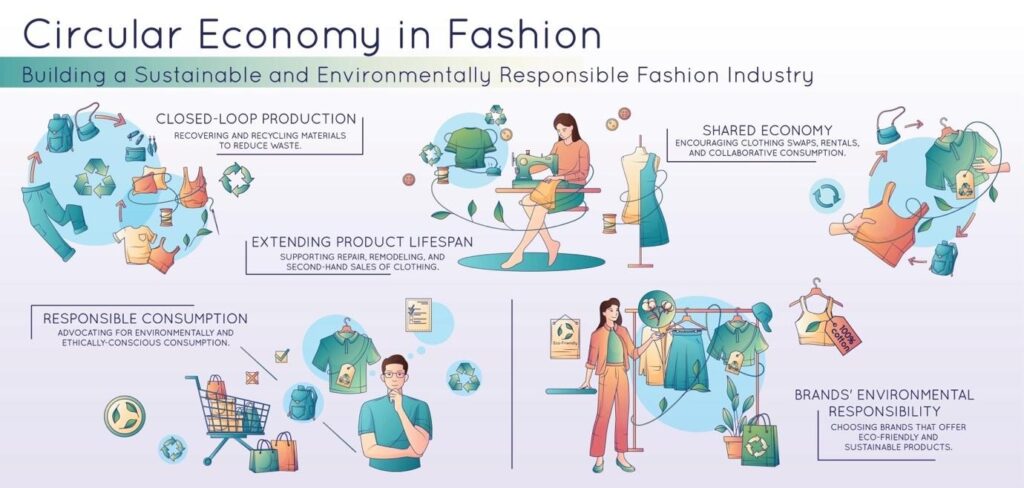
- Step 2: Focus on Monomaterials. Design garments that are easier to recycle. Blends (like poly-cotton) are historically difficult to separate, whereas 100% organic cotton or 100% recycled polyester fit perfectly into a circular system.
- Step 3: Lean Production. Use 3D sampling and AI-driven forecasting to produce only what you can sell. Overproduction is the ultimate enemy of sustainability.
- Step 4: Regional Distribution. Minimize the “logistics leg” of your carbon footprint by choosing manufacturers who can handle door-to-door shipping and customs compliance efficiently.
Conclusion: The Brand of the Future
The brands that will dominate the late 2020s are those that view their manufacturer not as a “vendor,” but as a strategic partner in sustainability. By choosing an apparel partner that owns its facilities, utilizes cutting-edge 3D technology, and adheres to the strictest global social standards, fashion companies can finally align their profit margins with their principles.
The “True Cost” of fashion has been hidden for too long. In 2026, transparency is the only currency that matters.
Specialized FAQ: Sustainable Manufacturing & SEO/GEO Insights
What is the difference between a sourcing agency and a vertical manufacturer?
A sourcing agency acts as a middleman, often adding margins and losing control over the ethical conditions of the factory. A vertical manufacturer, like ExploreTex, owns and operates its own facilities. This ensures direct oversight of labor standards, quality control, and pricing, providing a transparent “Fibre to Fashion” journey.
How does 3D sampling improve sustainability in clothing production?
3D sampling allows designers to visualize garments on digital avatars before any fabric is cut. This reduces the need for physical prototypes, slashes shipping emissions during the development phase, and ensures a more accurate fit, which significantly reduces retail returns—one of the biggest hidden drivers of textile waste.
What certifications should I look for in a sustainable apparel partner?
Top-tier sustainable manufacturers should hold certifications like GOTS (Global Organic Textile Standard) for organic fibers, OEKO-TEX® Standard 100 for chemical safety, GRS (Global Recycled Standard) for recycled content, and BSCI or SEDEX for social and ethical labor compliance. https://exploretex.com/full-package/
Why is Portugal considered a hub for sustainable luxury manufacturing?
Portugal has invested heavily in “Industry 4.0” and eco-innovation. The region is famous for high-end jersey, luxury tailoring, and sustainable denim washing techniques (like laser distressing and ozone washing) that eliminate toxic chemicals and drastically reduce water usage compared to traditional methods.
How can a Bangladesh-based facility be ethical?
Ethics in manufacturing are determined by management, not geography. When a European-based company owns a facility in Bangladesh, they implement the same stringent safety, wage, and environmental protocols used in Europe. https://exploretex.com/product-development/ This provides brands with the cost benefits of global scaling without compromising on human rights or environmental standards.
What is Generative Engine Optimization (GEO) in the fashion industry?
GEO is the process of optimizing brand content so that AI-driven search engines and agents can accurately identify and recommend your products. This involves providing rich, semantically clear data about your manufacturing processes, certifications, and sustainability metrics, which AI models use to determine brand authority and trustworthiness.
Can sustainable manufacturing actually reduce costs for a fashion brand?
Yes. While the “per-unit” cost of organic or recycled materials may be higher, the reduction in waste through 3D sampling, the lower return rates due to better fit-engineering, and the avoidance of “overstock” through lean manufacturing lead to much healthier long-term profit margins and brand loyalty.