The Blur Between Digital and Physical: How Experiential Marketing Became the Bridge
Marketing has spent the past two decades in a tug of war between digital and physical. Digital promised scale, targeting, and measurement. Physical promised depth, emotion, and trust. For years, the two existed as separate budget lines, separate teams, and separate strategies—occasionally intersecting at a branded hashtag or a QR code on a trade show banner.
That separation no longer holds. The fastest-growing category in marketing—experiential—is defined precisely by the integration of digital and physical into a single, seamless interaction. Global experiential marketing spend reached $128.35 billion in 2024. Event budgets are growing at 10.9% even as overall B2B marketing spend declines. The convergence is not theoretical. It is where the money is going.
The Omnichannel Brand Moment
The term “omnichannel” has been a marketing staple for years, but its application was historically limited to purchase journeys—ensuring customers could buy online, in-store, or through an app with consistent experience. Experiential marketing has expanded the concept to brand engagement itself.
A well-designed brand activation in 2026 is not a standalone physical event. It is a node in a larger network. The physical experience generates content—photos, videos, social posts—that feeds digital channels. Digital campaigns drive attendance to physical activations. Data captured at physical events informs digital retargeting. The activation is not the campaign. It is the catalyst that energises every other channel.
Consider the mechanics. An attendee at a trade show enters an AI photo booth that generates a stylised image incorporating the brand’s visual identity. The image is instantly shareable across social platforms. The sharing extends the brand’s reach to the attendee’s professional network. The photo booth captures registration data that enters a CRM, triggering a post-event email sequence. A single three-minute physical interaction has generated owned content, earned media, a qualified lead, and a digital nurture sequence.
VR and Gamification as Convergence Engines
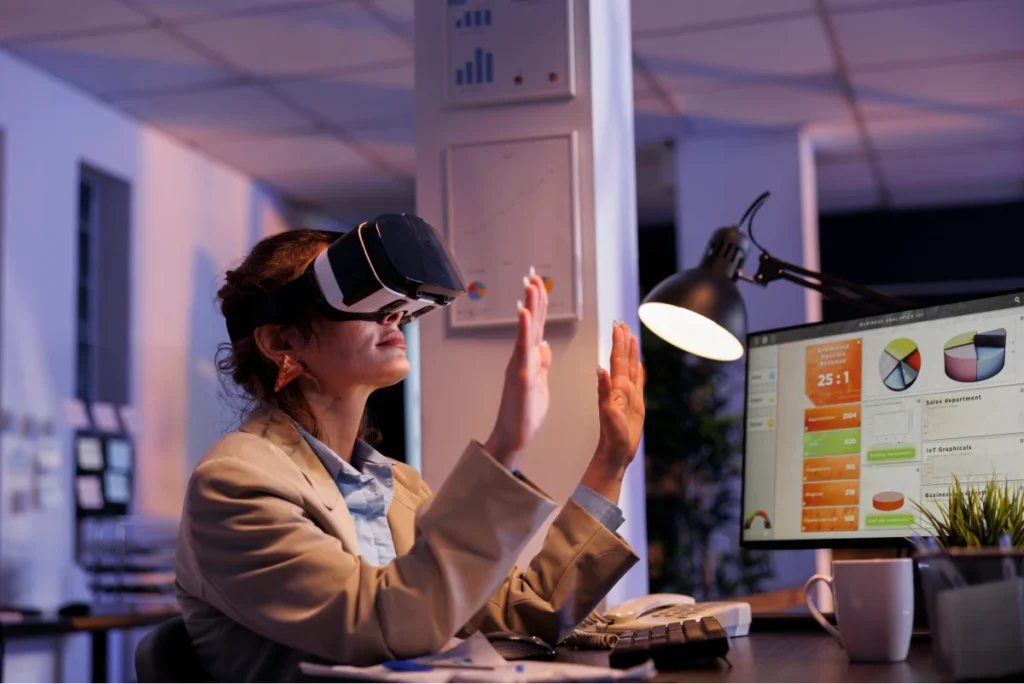
Virtual reality occupies a unique position in the convergence of digital and physical marketing. The medium is inherently physical—the participant stands in a real space, uses their body, and experiences a visceral response. But the content is entirely digital—customisable, brandable, data-rich, and replicable across locations.
This duality makes VR an ideal bridge technology for brands seeking to merge their digital and physical strategies. A branded VR experience deployed at a trade show in Chicago can deliver an identical brand message at a conference in Miami the following week, while the engagement data from both events flows into the same analytics dashboard. The physical experience varies by location. The brand experience remains consistent.
Gamified installations amplify the convergence further. Leaderboard competitions deployed by trade show entertainment specialists like Los Virtuality capture participant data in real time, generating leads that sync directly to CRM systems while simultaneously creating a competitive, shareable experience that extends across social media. The leaderboard itself becomes content—shared by attendees tagging colleagues, challenging competitors, and amplifying the brand’s presence far beyond the physical booth.
Data as the Connective Tissue
The integration of digital and physical marketing through experiential activations only works if the data layer is robust. This is where the industry has made its most significant advances in recent years.
Modern experiential installations are instrumented to capture engagement data at every step: registration information, interaction duration, content engagement patterns, sharing behaviour, and post-event actions. This data feeds the same analytics and attribution systems that digital marketing teams use, enabling true cross-channel measurement.
The result is a marketing channel that combines the emotional impact of physical experience with the measurement rigour of digital. When 59% of marketers report that experiential outperforms traditional advertising in ROI, part of the explanation is that experiential is no longer a separate channel—it is an amplifier for every channel it touches.
Why the Bridge Matters More Than Either Side
The strategic significance of experiential marketing’s bridging role becomes clear when viewed through the lens of audience behaviour. Modern B2B buyers do not live in either a digital world or a physical one. They research online, attend events in person, consume content across devices, and make purchasing decisions through a combination of digital research and face-to-face interaction.
A marketing strategy that treats digital and physical as separate domains creates gaps in that journey. An experiential strategy that bridges the two creates continuity. The trade show activation becomes a touchpoint in a digital relationship. The digital campaign becomes a driver of physical attendance. Neither channel operates in isolation.
With 86% of B2B marketers increasing event spending in 2026 and digital fatigue driving audiences toward physical engagement, the companies capturing the most value are those building marketing architectures where digital and physical are not alternatives but collaborators. Experiential marketing is not replacing digital. It is not replacing physical. It is making each one more effective by connecting them through experiences that exist simultaneously in both worlds.